Thursday, June 24, 2010

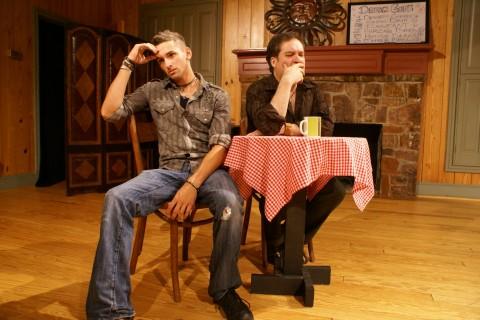
Dream Cafe- Experience #2


This will be short and sweet, as I have already reviewed DREAM CAFE once. As I mentioned, though, I would be seeing it multiple times.

In my second attendence, the scene order was: Dessert, Home, Strong Coffee, Slow Drip, Bitter, and Instant.

Again- IT WAS STUNNING. It drew gasps and tears from not only me but the entire audience. In addition to the genious that is the script, this particular night, there wasn't a single missed beat by the actors. Every scene began and ended with a total commitment to the moment by every actor, and the emotions were more real, more raw than I have experienced in a long time. The characters' journies and the outcome of the story was almost opposite this time from my first experience, and I felt like I hadn't met these characters or heard any of these lines before. Not only had the scene order changed, so had the motivation and the underlying emotion of every single word uttered. It wasn't until it was over and I was contemplating (and comparing notes) in my car did I truly begin to understand the different story I had experienced. Only then was I beginning to truly grasp all the stories within this script and the power of each and every one of them.

I told Mark-Brian I simply had to keep attending. I'll keep going until I either run out of money or get the ending to the story that I want. It's theatrical therapy for this love-sick and hopeless romantic of a critic!

GOMMORAH GO GO


Fight Boy Theatre’s GOMMORAH GO GO at Art 6 Coffee House, Denton


__________________________GOMMORAH GO GO__________________________


Kevin Wickersham’s GOMMORAH GO GO as produced by Denton’s Fight Boy Theatre, is the type of play that comes about in a theatrical frat house at two o’clock in the morning after a night of drinking- funny, raunchy, a little thoughtful and an almost success.

“Once upon a time in the Bible, there were two sister cities called Sodom and Gommorah. These two towns where the dirtiest, sexiest places on earth until one day God sent his two sexy dude angels to deliver his all mighty wrath. See what goes down- or up- in Sodom and Gommorah!” (from Fight Boy Theatre’s promotional materials.) Taken from the Biblical account found in Genesis 19, we see what happens when the sexy angels meet Lot (the only good man left), his horrible wife and his two daughters. And, oh yeah, God is a big drag queen and the arch angel isn’t all he appears to be either.

This is Wickersham’s first venture into both playwriting and directing, and his natural talent and rookie mistakes are both clearly evident. The play is well cast and blocked for the outdoor (aka backyard) playing space that is Art 6. The script itself, though humorous and shocking, only glazed the tip of all this story from the Bible could do. It could have been a political or even religious commentary. It could have been raunchier and funnier if some higher brow comedy had been incorporated, rather than a constant stream of jokes a 13 year old could concoct. It could have been taken to an even further extreme, on all levels, and then leaked to local churches to stir up a bit of a protest outside the fence- there truly is no such thing as bad publicity! Wickersham, nonetheless, guided his cast and crew into this fun production relatively well. For those who are willing to throw all seriousness to the wind, it was a good night of laughter.

Fight Boy Theatre makes a lot happen for very little money. (In the pre show speech, they even solicited donations on the basis of the need for fans to cool the audience on these hot summer nights.) The Biblical-ish costumes by Joshua Scott Hancock were pieced together from the closets of the actors, the local thrift stores and I even noticed an article or two recycled from last year’s production of LYSISTRATA. Set Designer Joshua Baker made heavy use of simplistic signs (heaven, Gommorah, and a street sign pointing to a variety of destinations including UNT and TWU). Sound Board Operator and Stage Manager Brandt Richey was even included in the storyline, but otherwise facilitated the sound effects and music the story required.

Pat Watson (no relation) as Lot gave a truly stunning and believable performance. I felt, given his talent, the story of Lot should have been extended. The second act was just too short, too choppy and too unfinished. There were a hundred places Watson could have taken his portrayal of Lot after leaving Sodom and Gommorah, given the dialogue. Lot’s Horrible Wife, who ends up turning into a pillar of salt (a trick a high budget theatre would have struggled with onstage, and Fight Boy Theatre’s creative tongue and cheek staging reminiscent of junior high productions worked), was loudly, aggressively, perfectly HORRIBLY played by Polly Maynard. She never gave up from belittling Lot, to the point you wondered why either of them married the other. As performed by Maynard, Lot’s wife was truly a bitch who no doubt deserved what she got. The two “virgin” daughters, Brittany Fowler and Ellaine Patman, only shined in the second act when they broke the fourth wall to discuss characterization and the plot synopsis. (A special ad-libbed line about giving up and going home to watch THE GOOD GUYS- Mondays on Fox at 8pm- was particularly funny.) The rather awkward portion of the story- when the daughters trick their father into sleeping with them in order to have children and carry on the bloodline, is a rather dark portion of Biblical history. This is where the script seemed to stall out, and the actors were left to fumble with motivation, any comedic relief, and even unclear blocking.

David Wickersham as Archie, the angel who points out the sins of Sodom and Gommorah to a less than interested God (Joshua Scott Hancock) was straight laced and matter of fact. His deep voice and commanding stage presence correctly lead me to assume a surprise twist from him in the end. He assisted in narrating the action and kept the story moving along. A flamboyant, toe nail painting God could only have been pulled off by an actor fully committed to this portrayal, and Hancock nailed it. In addition, Hancock also timed his delivery of lines such as “JESUS CHRIST? “Who, sir?” “Never mind.” And “One testament at a time, people, one testament at a time.” with easy pizzazz that had the audience both thinking and laughing. The two sexy dudes, Joseph Coulter and Mickey Farmer, had less sex appeal than confidence, but they worked it in their cut off shorts and bandanas.

The chorus was a hodgepodge of young college aged actors grinding each other and mouthing off sexual innuendos and perversions. They harmonized well consistently, though, as no one could utter Sodom and Gommorah without a gregorianesque chant erupting. The chorus was a blanket mass mob of sexual deviants. This was an area that more individual attention could have been paid to deepen the sac religiousness of the evening rather than skimming the top with predictable, albeit funny, stereotypes. As with any ensemble show, the chorus is full of the unsung heroes of theatre- those who know they aren’t being watched every second but nonetheless create a fully developed character and never once stop putting all their energy into conveying who and what this character is to any audience member willing to give them a few seconds of attention. I have no doubt, as my friend told me during his rehearsal period, that hips hurt from all the thrusting. I can’t say that he, nor the audience, really seemed to mind the pain though.

Art 6 even joined in the fun, offering Sodomizers to customers who dared for perverted pleasure.

GOMMORAH GO GO could have been a lot of things, but what it was played out as a night of blushing giggles and shocked gasps. Not a wasted evening, but not all it could have been either. I would love to see it again if Wickersham dared to go even further in his mockery- so long as my pastor doesn’t find out!

http://fightboytheatre.webs.com/

*REVIEWED 06/06/10 PERFORMANCE

Directed by Kevin Wickersham
Written by Kevin Wickersham
Stage Manager and Sound Board Op: Brandt Richey
Assistant Stage Manager: Michele Cote
Set Designer: Joshua Baker
Costume Designer and Choreographer: Joshua Scott Hancock


CAST
Lot: Pat Watson
Lot’s Horrible Wife: Polly Maynard
Daughter #1: Brittany Fowler
Daughter #2: Ellanie Patman
Archie: David Wickersham
God: Joshua Scott Hancock
Sexy Dude Angel #1: Joseph “Captain” Coulter
Sexy Dude Angel #2: Mickey Farmer
Chorus: Doug Arnold, Jonathan Adams, Caleb J. Creel, Kristina Lujan, Bryan Thomas Patrick, and Dara Prati

Monday, June 14, 2010

American Buffalo


Broken Gears Project Theatre’s AMERICAN BUFFALO at the I.S.P. Studios Theatre, Irving


__________________________AMERICAN BUFFALO_________________________
Reviewed by ASSOCIATE THEATER CRITIC, Laura L. Watson , THE COLUMN

David Mamet’s AMERICAN BUFFALO as produced by Broken Gears Project Theatre is an amazing display of acting and design talent, though most of the story and point of AMERICAN BUFFALO was lost on me.

“AMERICAN BUFFALO is David Mamet's engrossing, tragic take on the American Dream. Three men struggle in pursuit of their warped vision of success. Things take a violent turn in the end when corruption takes over and ideals are betrayed. At times cynical, humorous, and poignant American Buffalo is an emotionally charged, classic piece of American theater.” (taken from Broken Gears promotional materials.)

The play is set in Don’s junk store over the course of one day circa 1975. It opens with Don and Bobby cleaning up after a card game the night before. Through their conversation, we learn they have a job to do that night. Teach enters later and through the conversation we learn they plan to rob someone of his valuable coin collection. The second act begins about 12 hours later as they prepare for the robbery and end up turning on each other rather violently. There is a whole host of other characters who take on very real and defined personalities though we never see them. This play would EASILY be rated R for language alone. I dislike this play, very much, but was mesmerized by the performances being given. I got more from the actors than the storyline. Mamet seemed to be more about high emotions, yelling and swearing than anything of substance happening. The actors, though, with the assistance of the entire Broken Gears Project team, held my attention and kept me on the edge of my seat, waiting for the story to take off.

I.S.P. Studios in Irving is a very small space, allowing for only about 40 chairs, though the performance play space is quite ample. Set Designer/Dresser Cindy Ernst had the difficult task of outfitting the space with junk, yet junk that didn’t overpower the storyline and was period appropriate. I made a note in my program, even, that it looked like every prop the theatre company had ever used or had donated was placed on stage. I wanted to go shopping after the show was over- you never know what treasures are under the junk! The store itself was well constructed and felt very much like every junk store I’ve ever been in (and I’ve been in a lot.) The lighting was appropriately dark in the second act, but a little too dark for the daytime scene of act one.

AMERICAN BUFFALO was well cast and directed. Director Diana Gonzalez guided her actors to finding their inner motivation and creating wide character arcs where the dialogue hinted at nothing. The blocking never felt planned- always organic and well suited to the space. Terry Yates as Don, Alex Worthington as Bob, and Mike Schraeder as Teach were all ridiculously believable and likeable, faults and all. They each delivered the rapid, intense dialogue with precise diction and clearly had motivation for each line and all action (though I was never clued in). Schraeder was extremely good at what I like to call “detail acting”- the little things that clue us into the character such as repetitive yet specific gestures. Yates had the greatest discovery and the most layers to reveal- from the gentle, fatherly figure to his explosive anger in the second act. Worthington gave an extremely believable performance as the simple minded, good hearted, just wants to please “the guys” Bob.

As I said before, I don’t like the play, but I’d see AMERICAN BUFFALO again and again to soak in the astonishing performances given by these three fine actors. I eagerly await the next production from Broken Gears Project Theatre because I know it will be “risky, accessible, progressive, and socially aware theatre that will challenge” me.

Broken Gears Project David Mamet’s American Buffalo through June 19th.

Performed at I.S.P. Studios located at 1957 East Irving Blvd. - Irving, Texas 75060. www.brokengearstheatre.com


*REVIEWED 06/12/10 PERFORMANCE

Reviewed by ASSOCIATE THEATER CRITIC, Laura L. Watson, THE COLUMN

Directed by Diana Gonzalez
Written by David Mamet
Stage Manager: James McKenzie
Asst. Stage Manager: Ben Schroth
Technical Director/Lighting Design: David McKee
Set Designer/Set Dresser: Cindy Ernst
Asst. Technical Director/Asst. Set Designer/Head Carpenter: Joe Truitt
Asst. Set Dresser: Clare Kapusta
Property Designer: Joel Frapart
Costume Designer: Justin Locklear
Scenic Painter Kaori Imai
Producers: Whitney Holotik, Andrew Aguilar, Joey Folsom


CAST
Don Dubrow: Terry Yates
Walter Cole aka Teach: Mike Schraeder
Bob: Alex Worthington

Monday, May 31, 2010

DREAM CAFE, MBS Productions


__________________________DREAM CAFÉ_________________________________
Reviewed by ASSOCIATE THEATER CRITIC, Laura L. Watson , THE COLUMN

MBS Productions’ DREAM CAFÉ by Alejandro de la Costa is a truly stunning and revolutionary experience for the audience, but a nightmare for a critic to review. You see, there are 720 stories asking to be reviewed in this one play. Regardless of my struggle to review it for you, this is de la Costa’s (and MBS Productions’) finest work to date. If I could, I’d see Dream Café every night, every show.

“Bryan is a single, middle aged man trying to find his perfect mate. He keeps running up against obstacles preventing him from falling in love. The problem? Men. Various scenes are presented in this man’s life. What makes the play unique is that each night the same six scenes will be presented in random order as picked by the audience. The result is a different play nightly depending on the order of the scenes, 720 options!” (taken from MBS Productions’ promotional material.)

After a little preshow audience interaction, which includes asking the members of the audience how they are doing, if he can get them anything and wiping down the chairs, Ivan Jones as Kent the waiter gives a brief curtain speech about cell phones, auditions and upcoming MBS shows. The preshow activity is fine, it adds to the feeling that you are indeed stepping into Dream Café. However, it would be better if the speech was written in the program and/or said by the box office prior to the show. Jones’ line delivery and flippant attitude is better suited in the play, not before it.

Mark-Brian Sonna as the character Bryan then enters and gives the opening monologue about how the defining moments of life will determine who a person is depending on when the moments happen. Sonna asks the audience to choose the scene order, knowing only the names of the scenes. The scenes the audience must choose are listed on the “menu” of Dream Café and are titled according to the coffee referenced in the scene: Slow Drip, Dessert Coffee, House Blend, Bitter, Instant, and Strong. Each scene runs, on average, 15 minutes with the entire evening being 1 hour 55 minutes with 1 intermission after the third scene. We are also formally introduced to the characters. Lila, played by Jana Edele is Bryan’s best gal pal (a.k.a. f-g hag). Micah John Collin is Michael (Sven)- Bryan’s online love interest who lives 1000 miles away. Kyle Roark portrays the sexy, young, freshly out of the closet fling Bryan has off and on (and then off and then on) again. Kent is the over-the-top waiter at Dream Café who flirts with Bryan, but otherwise serves to announce the coffee selections and check off the scenes once they are performed. Once the scenes are selected and the characters are introduced, the story chosen for that night begins.

Slow Drip is about Bryan and Tony trying to have a drunken one night stand but it is interrupted by Bryan getting a text and then phone call from his online boyfriend, Sven who is having a crisis. Dessert Coffee is Sven and Bryan’s first face to face date as Sven is in town on business. The date is interrupted by Lila who gets Sven mixed up with Tony. House Blend is Bryan’s lunch date with Lila where we learn they, too had a one night stand once, but now Lila is dating Tyler. She divulges she is pregnant and asks for Bryan’s help. Kent also propositions Bryan for no strings attached sex. Bitter is the shortest scene because it is simply Bryan leaving a voice message for TM- his previous (a.k.a. ex-boyfriend, but he only calls him his “previous”)- about how he will attend the commitment ceremony.” However, we the audience see Bryan’s true feelings as he leaves this message. Instant is the most sexually charged scene as Tony and Bryan undress in a less than movie magic way (more realistically) and compare their bodies. Bryan is middle aged and Tony is young- and their opposite body types allow for a lot of physical comedy but it also raises the question- what do they see in each other? Strong Coffee is when Tony and Bryan meet at Dream Café, and Bryan confesses that he loves Tony. Depending on the order the scenes are portrayed determines who Bryan commits to, why certain relationships end and constructs the audience’s opinion of Bryan. At the end, Sonna returns as Bryan to give a final monologue about these moments in his life and how they made him the man he is today, though if the story had been told in a different order, he would be a different man. The audience is left to ponder this striking realization as the cast quietly comes out, takes one small bow, poses in their chairs in the Café, and then exit.

Sonna, MBS Productions’ artistic director, writes in his program note, “Enjoy this comedy where truth has been turned into fiction to point out the truth.” He says part of the play is biographical, but the characters are a mixture of real life people. It is rated NC-17 due to language and nudity, though I heard little “strong language” and only 1 brief moment of nudity (though there was plenty of guys in their underwear or a towel.) This play is truly driven by the characters and the story unfolding, not by dirty words or naked men. They are only there because the story necessitates them. It would be less than great without them- and I say that as someone most people consider to be a conservative old prude. Finally, it is billed as a comedy, but I think this is misleading. It’s a dramedy. It’s reality. Life is full of laughter in the midst of soul crushing and/or exhilarating drama- and this play holds all of that.

Addison’s Stone Cottage Theatre is SMALL, holding only about 60 seats which are in an L shape around the playing space, but de la Costa masterfully designed each corner of the space to tell the story. From the menu positioned over the fireplace to Tony’s bed in his apartment at the far downstage, no part of the set is left out and yet it is appropriately minimalistic. The same could be said for the lights and costume. Every character remains in about the same clothes throughout the play, with Sven in a bathrobe in one scene and dress shirt and tie for another. The play, with its lack of a timeline, doesn’t necessitate a costume change nor does it allow time for much of one. Sonna’s choice of music sets the mood of a delightful café in the beginning, and then, at the end, the same song becomes a haunting reminder of how time and love can pass by (or a cheery reminder of how great love is- depending on how your story ends!) Director Charles Ballinger expertly maneuvers the cast around and with the set pieces in organic blocking. I can only imagine the hours Ballinger spent guiding his actors on as many of the journeys this script proposed as time allowed. He blended all the elements- script, design and acting with ease- and I’m told this is true no matter what order the scenes are done.

As previously mentioned, Jones as Kent the waiter is flippant and flamboyant. Think of him as an African American Jack McFarland waiting tables in Dallas, Texas. We never once see him go deeper, and while I longed to see Kent be serious or less “flaming”, this is not who Kent is and it would be a disservice to the storyline and character if Jones tried to make him any deeper than he is. In short, he is annoying yet believable. Collin began each of his scenes a little stiff- as if he were only reciting lines, but he would build into something very real and powerful- often times pulling emotions from the gut of the audience as well as himself. Lila is a fast talking drama queen, and a bit of a ditz. At one point, we learn she is 38 and the audience can tell by looking at Edele that she is no where near this age, but she, in that moment, made me believe she was. During her most dramatic scene, though, I would have liked for her to slow down just a little so the audience could catch everything she said. Lila might want to blow off this major moment she created, but Edele needs to let the audience catch their breath as it hits us. Roark wrote in his bio that this was his first professional show, and his nerves (especially when he scanned the audience) definitely showed, but he took this nervous energy and poured it into the emotions and motivations of Tony. It doesn’t hurt that he is beautiful to look at and, well, a dream to watch move across the stage. Never once was there a moment when I saw him ‘acting.’ Roark need only find those moments of masculine strength to create a truly well rounded character. Sonna is an experienced stage and film actor whom I have worked with and seen perform multiple times over the last 6 years, and he had to use every once of training and experience to successfully become Bryan. My acting teacher once told me, “The most difficult thing about acting is being private in public.” I watched as Sonna was fully himself and yet fully this other character, Bryan. It was stage magic- a performance like none other in his MBS Productions’ career.

Now, add to this the knowledge that every night the scenes change order and the line delivery must reflect the motivation that is spurned by the moment before and the actors must continue the arch of their character which might be a journey they had yet to conceive of and… oh my! What a stellar ensemble performance! This is a play where every actor must be thinking, must be listening and must be reacting truthfully in the moment on top of to the letter perfect line memorization and all that other actor technique stuff. This is not a play for beginners or amateurs. At the beginning of each scene, it felt as if each actor needed a line or two to settle into the character and the story before they really took off. Perhaps it was opening weekend jitters or this is the result of being handed the script 3 minutes before you begin, I’m not sure. The performances were outstanding, nonetheless, and will only continue to improve as the actors discovery new layers to their characters each and every night. Though briefly shaky at times, it is a journey worth taking alongside them.

Gay or straight, a prude or promiscuous, DREAM CAFÉ reaches inside every audience member and pulls out something very real and universal. It leaves the audience thinking about their own “love scenes” and how if they had happened exactly the same way, but in a different order, how very different our lives would be. I know I sat in my car for 20 minutes just thinking. Just breathing. Just… experiencing. I have already reserved three tickets on three different nights just so I can return to this dream reality and have another experience unlike any other I will ever have again.

MBS Productions presents Alejandro de la Costa’s DREAM CAFE through June 19th.

Performed at The Stone Cottage Theatre located at 15650 Addison Rd, Addison TX 75001 as part of the Addison Conference Center, under the water tower. www.mbsproductions.net


MBS Productions’ DREAM CAFE at the Stone Cottage Theatre, Addison

*REVIEWED 05/29/10 PERFORMANCE

Reviewed by ASSOCIATE THEATER CRITIC, Laura L. Watson, THE COLUMN

Directed by Charles Ballinger
Written by Alejandro de la Costa
Assistant Director and Stage Manager: Lara Davison
Set and Costume Design: Alejandro de la Costa
Lighting and Sound Design: Mark-Brian Sonna

CAST
Bryan: Mark-Brian Sonna
Tony: Kyle Roark
Kent: Ivan Jones
Lila: Jana Edele
Michael (Sven): Micah John Collin

Monday, May 10, 2010

NO EXIT Sundown Collaborative Theatre


__________________________NO EXIT_________________________
Reviewed by ASSOCIATE THEATER CRITIC, Laura L. Watson , THE COLUMN


Denton’s Sundown Collaborative Theatre once again succeeds in their mission of artistic fulfillment and thought-provoking nights of theatre with their latest production, NO EXIT by Jean-Paul Sartre, though in the end, it felt as if something was missing, at least for me. Though every theatrical aspect of this play could be described anywhere from good to excellent, overall, I just didn’t believe it. I didn’t believe the emotions, the story, the laughter, the memories, or even the furniture. It all gave me an illusion of an amazing experience in a studio theatre, but it fell just short. I didn’t like it, but I can’t articulate why. I recommend everyone see it. Welcome to a hellish review.

‘One man and two women enter a room in Hell. All expect to be tortured, but no torturer arrives. Instead, they realize they are there to torture each other, which they do so effectively, by probing each other's sins, desires, and unpleasant memories. Eventually, as their connection to Earth dwindles and the living move on, they are left with only their own thoughts and the company of the other two.’ (Taken from Sundown Collaborative’s website.)

Garcin is a no- nonsense reporter who enters the room first and asks numerous questions of his Valet- who also served as usher for the production. Inez is, in her own words, a bitch who readily jumps at the chance to torture her companions. Estelle is a wide eyed socialite who is extra perky, extra prim, and extra proper. When looking for three differing characters, there could be none more opposite than these. This play deals with many of the theories of existentialism and never once stops throwing philosophical curve balls- in many different forms- at the audience. This is not a “sit back and relax” kind of play. It’s a sit up, pay attention, take notes, and review EVERYTHING three times kind of experience.

Director Tashina Richardson knew the heavy weight of the material she presented her young troupe of actors and fellow collaborators with, and she did not shy away from bold, artistic choices. These choices are mostly rewarding. But, when each choice is added up, in the end, it’s almost a masterpiece.

Hands down, NO EXIT has the BEST pre-show/curtain speech I have ever seen. Each audience member is escorted by the Valet (or usher) one at a time into the silent and fully lit theatre and directed to a particular seat. You are told politely but firmly “You will sit here.” Your family and/ or friends are seated elsewhere. You are now seated next to strangers in hard, squeaky chairs. The audience is almost in the round, leaving just enough room on the north wall for the entrances and, well, there aren’t many exits. Every light on the grid is on at full intensity- and they never dim. The entire point of the play is that hell is being your true self in front of other people. (Sounds like some theories from a recent acting class I took.) Even the audience is made to feel uncomfortable in ways that just mount as the show continues. Once the audience was seated, The Valet’s curtain speech was simple, to the point, and oh so perfect. “Hell has no cell phones, intermissions, and contrary to the sign (pointing out the red EXIT sign.) no exits.” By the end of the one hour and forty minute show- without an intermission, though I only checked my watch once- you realize you have been sitting in hell with Garcin, Inez, and Estelle. They have been torturing you, and you have probably been torturing them. Torture isn’t always physical- it’s done with words, with revelations, with loud breathing, with squeaky chairs, and with a heat that the actors weren’t faking. It does get hot in that studio room! It is a true experience as only live theatre can give and it helps to carry both the storyline and the performances.

The language of the play is high and lofty, even formal with a hint of an English accent, but this production was in Standard American English. It could easily be done as a period piece, though (I think) it was done as a contemporary piece. This is another one of those uncomfortable things: when is this play set? After death, there is no sense of time- it’s all just eternity, and the lack of time specific costumes, props, sets, or hints within the dialogue introduce the audience to this concept. The costumes could have been from the 1940s or today. They were appropriate in fit and color to each character and had the layers that each actor needed to physically reveal as they did so with their words. The furniture, as described by the characters, was suppose to be Second Empire, but this was the weakest point of the design. They were just blocks with fancy cloth draped over them. It works, but on a “this is a group of very talented artists who are way under-funded” scale. The Redbud Studio Theatre is the perfect production room for this play. It is small, has only one exit, and was easily adapted to look like a sitting room or a parlor. I wasn’t watching through an imaginary fourth wall as three people in the living room of hell had this experience- no, instead I was sitting there, going through it with them. I, like Garcin, want answers and specifics to basic questions. Who, what, when, where, why, and how. This play, nor this production of it, answers those questions, and it is maddening. Then again, I was sitting in hell, so it works.

Each of the actors was secure in their lines and organic yet choreographed blocking, and each held a commanding presence on the stage. Valet and Assistant Director Christopher David Taylor was quietly charming yet demonic. He was the most complete, the most true, of all the characters. From the first greeting at the box office to the final pose (not really a bow) he never wavered from his purpose nor strove to be a scene stealer. He quietly yet adeptly supported the entire cast by setting the stage and answering questions as needed. He was only seen briefly after his initial scene to introduce the new characters into the room. Travis Stuebing as Garcin is tall with the look of a respectable, if not boring, business man. He carries himself as a proper gentleman should. (Obscure reference: He VERY much carried himself and made gestures in an identical way to the Gentleman of the infamous Buffy the Vampire Slayer silent episode, HUSH. This makes him also slightly creepy, appropriately so as is soon revealed.) Maggie Smith as Inez walked into the room and with her first line let the audience know exactly who and what she was- a bitchy lesbian. Estelle, played by Sarah Quiroz, was equally able to introduce herself completely to the audience in a matter of seconds. However, as the play progressed, the actors seemed stuck in these masterfully crafted first impressions of their characters rather than getting to the heart of their true beings. Honestly, I was intrigued by the stories of what had transpired for each of these while alive on earth and what they “saw” when the looked back to family, friends, and co-workers, but I never once believed them. They never “saw” what they were reciting about, nor was the laughter genuine. Especially for Estelle and Garcin- their bursts of laughter, especially in the end when they are standing revealed, were brutally forced. The masks the characters wear in the beginning were little different than the true self all this ‘torture’ was suppose to reveal to both them and the audience by the end. Perhaps the actors need to go deeper, go truer. For example, if a character is crying, then the actor needs to really cry or utilize another emotion. Don’t fake it, especially in such a small space. Also, the play calls for a couple of rather intense physical moments between Estelle and Garcin, complete with groping, kissing, and panting, but either the actors were uncomfortable or the characters were truly not in the moment. It was hard to tell- all I know is, these supposed highly charged sexual situations fell flat and rang hallow. Despite this, though, the actors maintained their focus on poking and prodding one another and I remained engaged in the performance for the entire time.

With NO EXIT, Sundown Collaborative Theatre succeeds in presenting its audience with a ‘thought provoking and discussion inciting’ experience, even if it is less than perfectly believable.


Sundown Collaborative Theatre presents Jean-Paul Sartre’s NO EXIT through May 15th.

Performed at The Redbud Studio Theatre located at 304 Administration Drive, Denton TX 76203 on the Campus of TWU in room 204. www.sundowntheatre.org

Jean-Paul Sartre’s NO EXIT at Redbud Studio Theatre, TWU

*REVIEWED 05/08/10 PERFORMANCE

Reviewed by ASSOCIATE THEATER CRITIC, Laura L. Watson, THE COLUMN

Directed by Tashina Richardson
Written by Jean-Paul Sartre
Assistant Director: Christopher David Taylor
Stage Manager: Sarah Smith
Set/Props Design: Brittany Gavit, Devin Lennon-Davey
Costume/Makeup Design: Candace Cockerham

CAST
Garcin: Travis Stuebing
Inez: Maggie Smith
Estelle: Sarah Quiroz
Valet: Christopher David Taylor
Understudies: Bonnie McGowan, Kristen Ranna, Austin Struckmeyer

Originally pulished in John Garcia's The Column

Tuesday, April 27, 2010

Stage West's THE LONESOME WEST

Originally published in John Garcia's The Column

Martin McDonagh’s THE LONESOME WEST at Stage West

*REVIEWED 04/24/10 PERFORMANCE


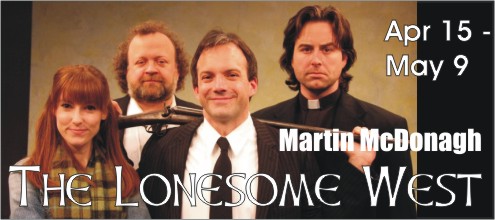
Stage West’s THE LONESOME WEST on Saturday April 24 was a charming, witty and funny Irish comedy that left me torn between the dramatic and the jokes, probably as the playwright Martin McDonagh intended.

The play centers on two brothers, their priest and a teenage girl. ‘There's been a recent, possibly accidental shooting, in which Coleman Connor has killed his father. Now Coleman and his brother Valene are sharing their father’s house, locked in a years-old hostility which constantly threatens to escalate. Father Welsh is determined to broker some kind of peace between them, but it’s an uphill battle for a priest who is generally regarded by them with a kind of amused and tolerant contempt. Plus, Father Welsh is a tad too attached to the wicked Irish home-brew, poteen, which he gets from the flirtatious and tough local teenager, Girleen.’ (taken from Stage West’s website and promotional materials.) Add to this mix a stove, tabloids, shotgun and a collection of religious figurines and it’s a fine recipe straight from Leenane, Galway county, Ireland.

THE LONESOME WEST is full of Irish humor- both dark and satirical. The drama sneaks up on the audience- a few jabs between brothers leads to cruel acts of destruction that, for me, left me hanging between laughter and anger at the end of the night. For example, while I willingly laughed at the jokes made about murders and suicides, I just couldn’t bring myself to laugh about the poor dog whose ears were cut off. Also worthy of note is the political incorrectness - referring to blacks as darkies and a rather free wielding use of the f- word (including by the priest.) Some theatre goers might find this, along with the type of humor on sensitive subjects, offensive, but for those willing to lay that aside, it’s a play that gives a glimpse into another culture and possibly sheds some light onto our own. Plus, an Irishman can make common swear words sound like poetry to my ears with the right accent and lilt. Irish music and spirits are provided to help with this ‘laying down of inhibitions’ before the show and during intermission in the Ol’ Vic Café.

Director Jim Covault has assembled an excellent cast and guided them through a very dialogue heavy production without being stagnant in the blocking nor the energy. Each scene, though, was followed by stage hands cleaning up, moving things, or returning props to their proper places. For me, it is very jarring to have a scene followed by stagehands doing their job on the lighted stage. I’m not familiar with the play nor the space of Stage West, so I don’t know why the director chose to transition between scenes as such. All I can say, though, is for those brief moments I was reminded I was watching a play and not living a real experience. However, once they finished their business, in less than a minute, we picked up the story and continued along.

Covault also served as the set designer and co-costume designer, and in this manner was able to unify all the elements into one cohesive story. The set was the living room of the Coleman home (and for one brief scene a bench at the park), and it was clear to me Covault had done his research into typical Irish homes. It was very European in a lot of ways, and this added to its authenticity for me. It was simple but detailed enough to feel like a real home, complete with a large stone hearth, the dinning room table and an old comfy chair. The park setting was the far stage right apron and made out of a single bench and lighting in the shape of trees. No great expense or effort, and yet the mood of the lonely priest sitting there was captured instantly. The action in the home also flowed naturally between the front door and the two bedrooms. The two brothers are very violent prone and Covault enlisted the help of stunt choreographer and cast member Jakie Cabe. The choreography was very good, but on this night, the actors seemed to hesitate between each movement and the precise counts of the choreography were visible -as were the wide swings that never connected but were reacted to as if they had. A little bit faster on the execution and punches, kicks, and body slams closer to the target would help a lot. The costumes were contemporary and simple- the priest in his “uniform”, the teenage girl in her school uniform, and the two brothers alternating between funeral suits and casual cardigans. There were two minor special effects- both related to the bright orange stove moved in half way through Act I, and they worked well without overpowering the storyline.

Trey Walpole as Coleman and Jakie Cabe as Valene fulfill their roles with no hint of “acting.” Walpole is a force to be reckoned with as the big, burley older brother which stands in stark contrast (physically, vocally and emotionally) to Cabe’s appropriately whiney and petty younger brother. The emotional pain as each brother lashed out at the other was palpable, though, and it left no doubt in my mind that these actors were reaching deep within and grappling with some very true emotions. By the end of the play, though, I disliked both brothers very much because of their ultimate decisions and the revelation of their true selves. Perhaps the playwright intended it this way, or this was due to choices the actors made, I’m not sure. I just know I laughed at their on stage antics and left knowing I had seen a play with fictional characters that wanted me to think. In the end, hopefully without giving anything away, the intensity of the performance seemed to fizzle, though, as each brother made one final confession to the other, and I found myself not believing either one’s sincerity. Again, maybe I’m not suppose to, but I really wanted to, for the Priest’s sake.

Father Welsh-Walsh?-no Welsh (an ongoing joke within the play) was subtly played by Justin Flowers. He might drink a bit too much, but he has good reasons to, and Flowers never lets the amount of alcohol supposedly in his system carry his performance. Instead, he chose to let his alcoholic tendencies be a minor consideration and instead focused on the onslaught of doubt that plagued his soul. In the park bench, his hands are wrapped in bandages, but I never saw him move them stiffly or as if he were in pain, which given what had just happened seems highly unlikely. The show stopping moment, though, was Cabe’s rather lengthy monologue (roughly ten minutes) in which he made not a single gesture or movement and yet the audience was enraptured by the complexities of his voice and the feelings conveyed on his face. Add to it the absolute shock of the following scene, and it’s no surprise the audience was left a little breathless.

Meg Bauman, Girleen, was the classic Irish beauty with red hair and ivory skin, but a mouth that forced the men she dealt with almost daily to blush and stammer. She hid her school girl crush on the Priest well, but Bauman needed to strengthen her seductive ways in Act I to counteract her tenderness in Act II. For example, in the park scene, there was no difference between her kidding style and her very real, open and sharing moment. While each actor is from Texas, and therefore had to put in extensive work to master their Irish accent, Bauman seemed to struggle the most with it at times. She became a little sing songy with it, and when she broke this vocal pattern, she would momentarily loose the accent. But, it was in these moments that I really liked Girleen the most. She felt very real and raw, and the accent returned just in time to keep her Irish, too.

THE LONESOME WEST is not for everyone, but for those who enjoy a politically incorrect and darkly humorous view of an extreme version of reality, they will find exactly what they are looking for at Stage West.


Stage West presents Martin McDonagh’s THE LONESOME WEST through May 9th.

Performed at The Stage West Theatre located at 821 W. Vickery, Ft. Worth 76104. www.stagewest.org 817-784-9378


Reviewed by ASSOCIATE THEATER CRITIC, Laura L. Watson, THE COLUMN

Directed by Jim Covault
Stage Management by Peggy Kruger-O’Brien
Lighting Design by Michael O’Brien
Set Design by Jim Covault
Costume Design by Jim Covault and Peggy Kruger-O’Brien
Props/ Set Décor by Lynn Lovett
Stunt Choreography by Jakie Cabe

CAST:
COLEMAN CONNOR Trey Walpole
VALENE CONNOR Jakie Cabe
FATHER WELCH Justin Flowers
GIRLEEN KELLEHER Meg Bauman

__________________________THE LONESOME WEST_________________________
Reviewed by ASSOCIATE THEATER CRITIC, Laura L. Watson , THE COLUMN

Thursday, April 22, 2010

Cinderella by Denton Community Theatre


Originally published in John Garcia's The Column.

Denton Community Theatre’s CINDERELLA on April 18 was a quaint attempt at a much beloved fairy tale that fell just short of magical. Elements of an over the top, cartoonish musical were mixed with realistic approaches which resulted in a lack luster performance and an almost magical experience.

Richard Rodgers and Oscar Hammerstein’s musical CINDERELLA, originally written for television in 1957, is the story we are all familiar with: a young girl is overworked by her stepmother and two stepsisters, but does so without complaint. Then, the handsome prince gives a ball- with the help of his mother and the sympathy of his father- in hopes of finding himself a bride. Cinderella’s magical godmother grants her wish and sends her to the ball in a carriage created from a pumpkin, driven by four (formally mice) horses, and wearing the most beautiful dress. The Prince is instantly drawn to her. She knows she must leave by midnight, but she and the Prince are so engrossed in each other, she forgets until the clock starts to chime. She runs away, leaving her glass slipper behind. The Prince begins to search for the young lady who fits the shoe, and when he finds her, they get married. Rodgers and Hammerstein added quit a bit of tongue and cheek humor and created some beautiful, classic, fairy tale numbers to help the story along. Their version of CINDERELLA has something to offer audiences of all ages when done with the same finesse and gusto with which they wrote it.

A child’s fairy tale will have a lot of children in the audience, and it seems this production was created with them in mind. However, even the children seemed to long for something more. The cast was low on energy and more focused on looking and sounding like versions of their characters rather than being real people. This, along with less than stellar special effects and unimaginative staging by director Sharon Veselic left the entire audience bored. Bored children get rather wiggly and rambunctious, which distracted the rest of us from enjoying the performance as well.

Playing the title character was high school senior Hannah Lane. Her beautiful hair and dainty features made a very picturesque Cinderella, but her stiff movements and pinched face seemed to trap her within her own body. I wanted to see her do this performance without all the huge, over the head arm swoops and with relaxed shoulders. She moved like a ballerina in a music box which came across as robotic rather than the regal she was going for. Though clearly she is classically trained and was able to hit all of the notes in the music, her voice lacked natural talent and sounded artificial. Her voice is nice, pleasant, but there was something missing. Perhaps it was passion or true emotions, I am not sure, but I do know that I wanted her to sing with a natural sweetness that embodied Cinderella. All of the actors, with the help of dialect coach Hazel Murphy, had British accents, and it was probably a collective decision to give Cinderella an upper class tone. Hannah Lane did well with this accent, but lost it at times while singing. (One must question, though, if Cinderella would have an upper class or a lower class accent, since she is, after all, a servant.) Her speaking voice, though, was very melodious and soothing. She was gentle with it, though I sensed she probably has a great range and a lot of power. Hannah Lane has a lovely future ahead of her, but I wanted to see a real person and instead got a caricature of a princess.

Keith J. Warren was Prince Christopher. He looked like a prince- tall and strong with dark hair and warm smile. He made a lovely picture alongside Cinderella- the handsome prince and the beautiful princess. However, he only had two facial expressions, mouth turned down and eyebrows up in surprised looking sadness, and smiling with eyebrows up in surprised looking happiness. There was no variance between the two. Also, when he spoke it came across as wimpy and whiney and a little high. I wanted him to be more masculine, with a deep booming voice when he gave orders but tender and comforting when with Cinderella. He also hesitated before each kiss with Cinderella, perhaps because of her young age or perhaps because of a director’s instruction to keep it very G-rated, but whatever the reason, it did not feel like love’s true kiss. Along with Hannah Lane, I wanted to see the two of them smile at each other and relax physically, especially at the ball and in the finale. Instead, they looked so serious, almost like a melodrama.

The stepmother was well played by Connie Lane (Hannah Lane’s real life mother). In this version, the stepmother is more comedic than evil, and she did an excellent job of trying to give some laughs to the older crowd in the audience. She has an impressive vocal range, going deep into her chest and then into a falsetto voice. She also has a menacing stare that leaves no doubt who is in charge in that house. I would love to see her take the stepmother a little darker, a little more sinister, either cartoon- like or realistically. I think it would add a nice contrasting element to the storyline and the physical acting on the stage.

The two stepsisters, Joy and Portia were played by Paige Wells and Kris Walters, respectively. As intended, they were the over-the-top comedic relief of the performance. Wells is tall and thin with a whiney voice that alternates between nasal and chesty while Walters is, well, not so tall and not so thin but uses her body masterfully to create her character. I found myself drawn to them the most because they made a clear choice to go over-the-top and did not sit on the fence as many of their cast mates did. And, for them, it worked and added some much needed comedic relief throughout. At the end, during the song “A Lovely Night”, the two sisters along with the stepmother and Cinderella had a lovely harmony. This song, for me, stole the show in vocal quality and emotional interpretation. It felt the most real. Wells also worked as the choreographer. Her choreography was simplistic but very picturesque and worked nicely within the set and costume limitations.

Lana Hoover as the Fairy Godmother was quirky and delightful, like an energetic old lady with massive amounts of energy to burn. Her singing seemed forced, almost strained at times, but her grasp of the character’s purpose within the story and much needed comedic relief was spot on. Her wig, however, was not. It was a dark brown, curly pony tail attached to her bright red natural hair. I found it to be very distracting. The children in the audience liked her magic tricks and were very drawn to her. I wanted more, but also knew, by the time she arrived, she would have over powered the entire cast if she had done all I wanted.

Charles Beachley as the King and Sharon Barnhill as the Queen make a cute elderly couple, though some of their comedic bits fell a little flat. Barnhill was a little soft spoken and subdued when an over-the-top performance as the concerned, meddling mother would have helped the adults remain engaged in her performance and the storyline. However, her tenderness with the prince and very sweet demeanor allowed us to see something other than prim and proper royalty. I wanted to see more of Beachley’s good natured and jolly king, but other than his introduction in Act I (with an ongoing joke about his falling pants that fell just two too many times), he was sad or bored throughout the rest of the performance.

The herald and the minister were both portrayed by Christopher Adams. He has an impressive biography which lead me to expect an energetic and lively opening number, “The Prince is Giving a Ball.” Though he has a nice singing voice and physicalized his characters well, he never once smiled. He was either near tears or falling asleep. Perhaps a can of his favorite energy drink or caffeinated beverage was in order. I think an emotional charge will help him project his singing voice with more power, too, and that would help the opening number tremendously.

The ensemble was on stage for most of the show, and their energy was also low. When they were the background action to the main characters, they seemed to forget they were visible on stage and fell out of character. Musically they blended well together, though, and when they were singing and/or dancing, they each had unique characters that added to the overall story. Of special note was the tall man with the mustache (it is impossible to pick him out of the showbill without photos). He added a lot of ongoing physical comedy and even created a minor sub-story with the stepmother at the ball. He did his best to keep the background action interesting. Also, Cody Vann (ensemble who played the footman for the carriage ride) looked disinterested the entire performance. In contrast, the young grade school girls- Kendall Tubbs, Shelby DuPont, and Anna Sitzes were delighted to skip on and off stage and added a youthful joy to the production.

The staging was simplistic- a little too much so. The big numbers, such as “The Prince is Giving a Ball” and the finale “The Wedding” were underwhelming as the entire cast just stood singing. There was no fantastic lighting design, no solo dancers, and very little, if any choreography. During the ball, there was one solo dancer, a young girl, who did a lovely job but was very small and not very fancifully dressed, so I was confused as to who she was and why she was dancing alone at the ball. The full orchestra, conducted by Ray Staniszewski, sat upstage of all the action and partially hidden by the set at times, though they did peek out from time to time. Live music is always a wonderful addition to a musical, and this proved to be true here, too. The set, designed by Erin Ball, was like a child’s fantasy dream for the ball and the countryside while realistic inside Cinderella’s house. Despite this, the set worked for me. It was well constructed and functional, though very noisy for the multiple set changes all done by the ensemble. Tina Barrus’ costumes were the epitome of over-the-top fairy tale. Lots of bright colors, hoop skirts, and men in knickers created the world in a visually stunning way. The children and adults alike were constantly mesmerized by the parade of colors. There were far fewer special effects than one expects for Cinderella, and more would have added to the magical atmosphere. The Godmother magically starts a fire for Cinderella, a window refuses to stay shut, and small rosebuds bloom open with a little coaching. There were no special effects, only lighting, music and choreography, for the big transformation that sends Cinderella to the ball in a carriage, dress, and glass slippers. The carriage was exquisite and was pulled by four ensemble with stunning horse head masks. Cinderella’s costume change was less than impressive because we saw how it was done. (Magic tricks are always ruined when you see them in action. Some creative thinking or even seeking the help of a real magician would be a good idea for a trick such as that.)

The director’s note in the showbill invited the audience to “take a deep breath, sit back and transport yourselves to the enchanted land of Prince Charming’s castle and the timeless story of Cinderella.” The little girls in the audience, particularly those who came in costume, had a wonderful experience complete with getting their picture taken in a pumpkin carriage in the lobby. The rest of us, though, needed a little more spectacle, a little more magic, and whole lot more energy to make it worthy of attending. It was nice, pleasant, but I expect more out of the talent available in Denton- yes, even at the community theatre level.

Denton Community Theatre and the Fabulous 40 Present: Rodgers and Hammerstein’s CINDERELLA through April 25th.

Performed at The Campus Theatre located at 214 W. Hickory St, Denton, TX 76201. 940-382-1915.